











Dyslexia is a neurobiological disorder that affects the ability to read fluently and accurately, comprehend reading, and spell. It is classified as a learning disorder and affects between 5% and 10% of the child population. It is not related to intelligence, but it can affect people’s self-esteem (Odegard et al., 2024; Snowling & Hulne, 2024).
Dyslexia is a specific learning disorder that affects reading. It has a neurobiological origin and a hereditary component. It mainly affects phonological processing, which is the process responsible for associating phonemes with graphemes, leading to errors when reading or writing words (Catts et al., 2024).
According to the International Dyslexia Association, dyslexia is a form of neurodivergence, meaning it is a different way of processing information. Therefore, it will accompany people throughout their lives. During the school years, difficulties tend to be more prevalent, as reading and writing are the main channels on which learning is based. Despite this, with appropriate re-education, difficulties can be minimised by learning strategies (Odergard et al., 2024).
Dyslexia is understood as a continuum of difficulties. It is not black and white; each person has difficulties and strengths, with a wide range of shades of grey. It is affected by risk factors such as family history, difficulties with oral language, or difficulties related to phonological awareness. On the other hand, there are resilience factors: good verbal memory, a broad vocabulary, and family support (Catts & Petscher, 2022).

Good comprehension and oral expression skills can compensate for difficulties with written language, which can delay diagnosis. That is why it is very important to observe the child’s behaviour when reading. Frustration, low self-esteem, high anxiety and effort may indicate a reading difficulty (Donolato et al, 2022; Francis et al., 2019).
Warning signs according to age
Parents are the people who live with their children and help them with their homework or practise with them. Therefore, they may notice some of the warning signs, especially those present in the early stages of development.
Preeschool stage (3-5 years):
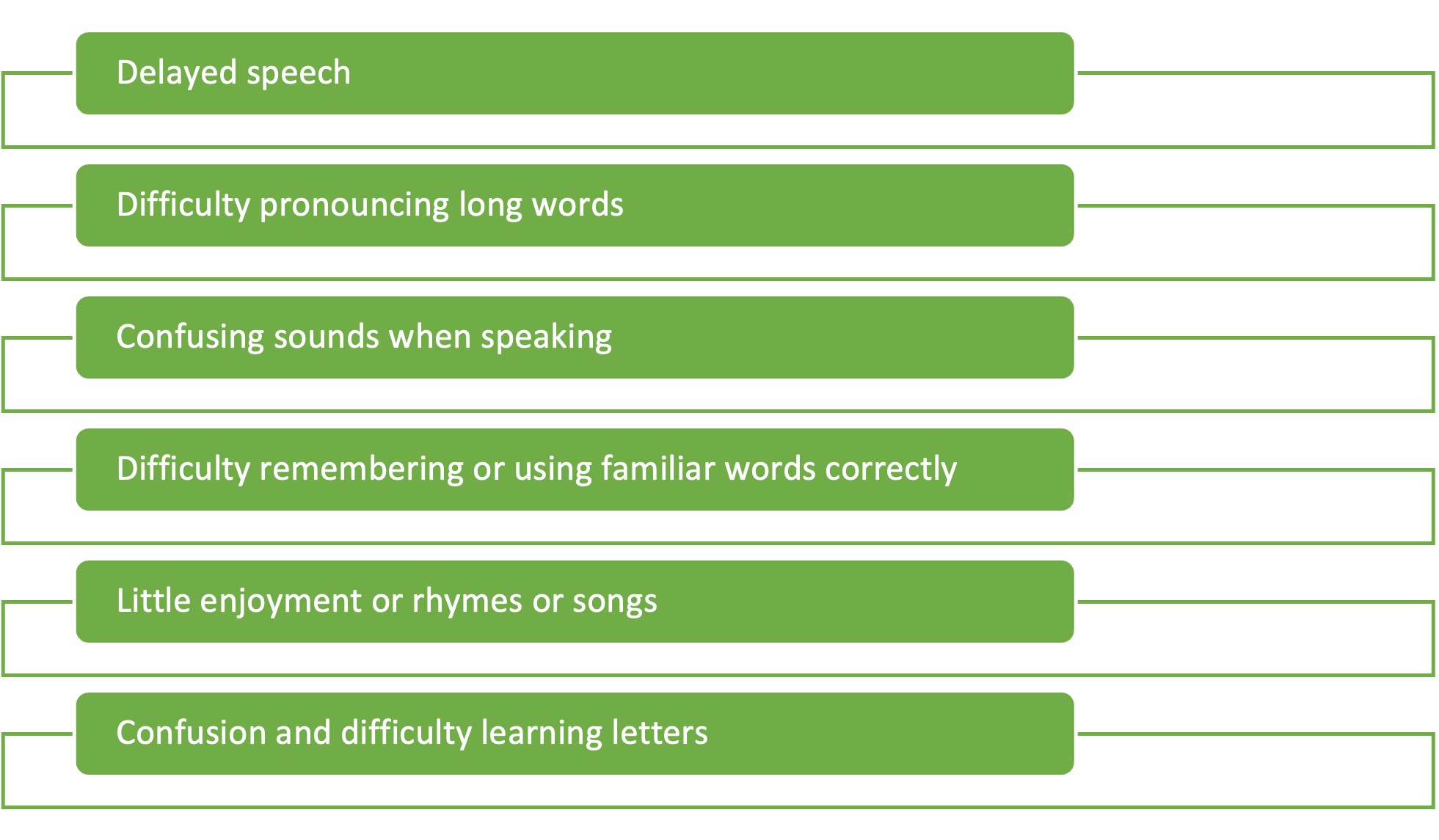
It should be noted that these signs may be part of the learning process, but they should be taken into account if they are very pronounced or if they persist beyond 6 months, as they may be indicators of difficulty in acquiring reading skills (British Dyslexia Association, 2023).
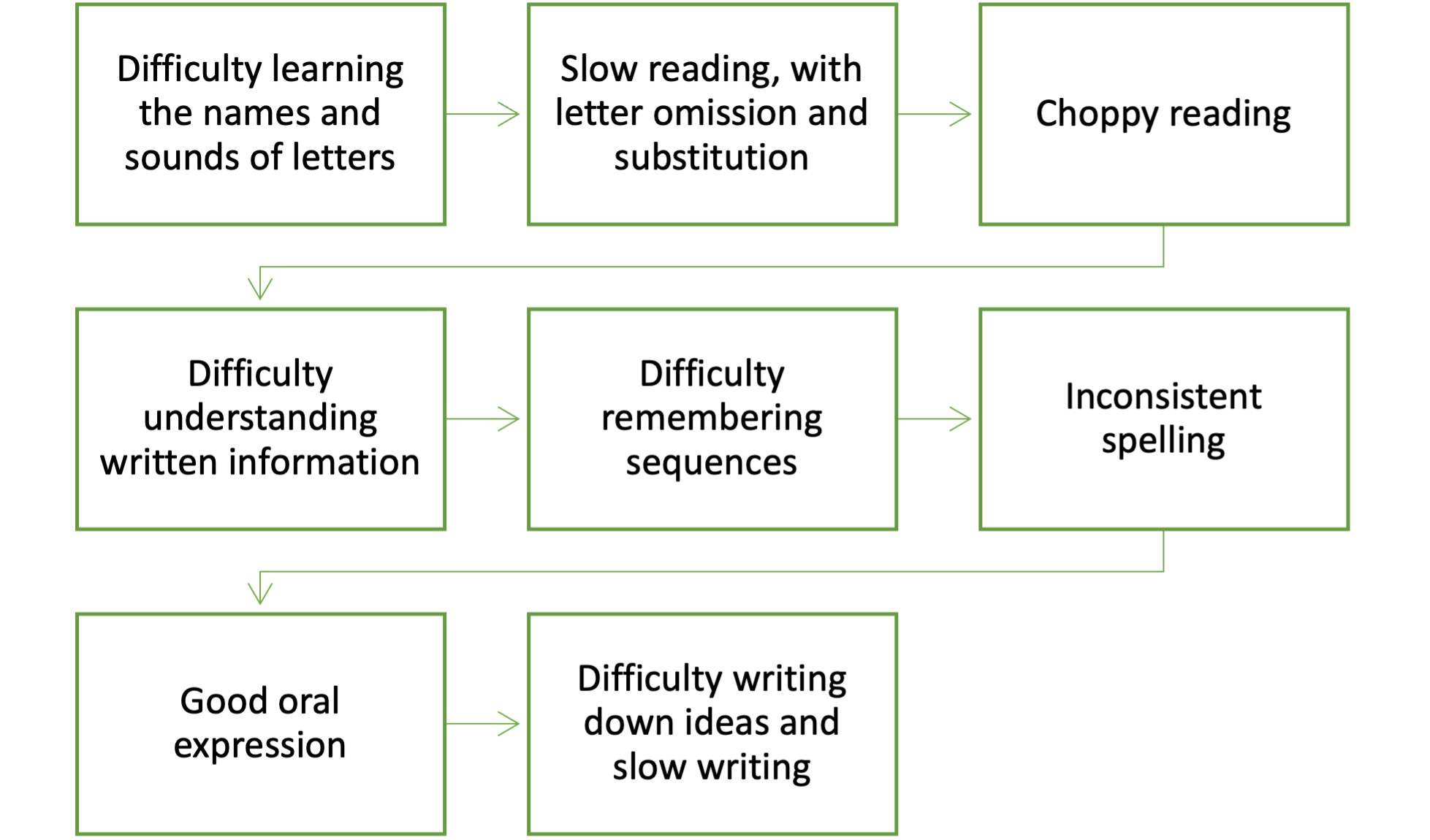
School stage (6-12 years):
At this stage, reading difficulties become more apparent. The most relevant signs are:
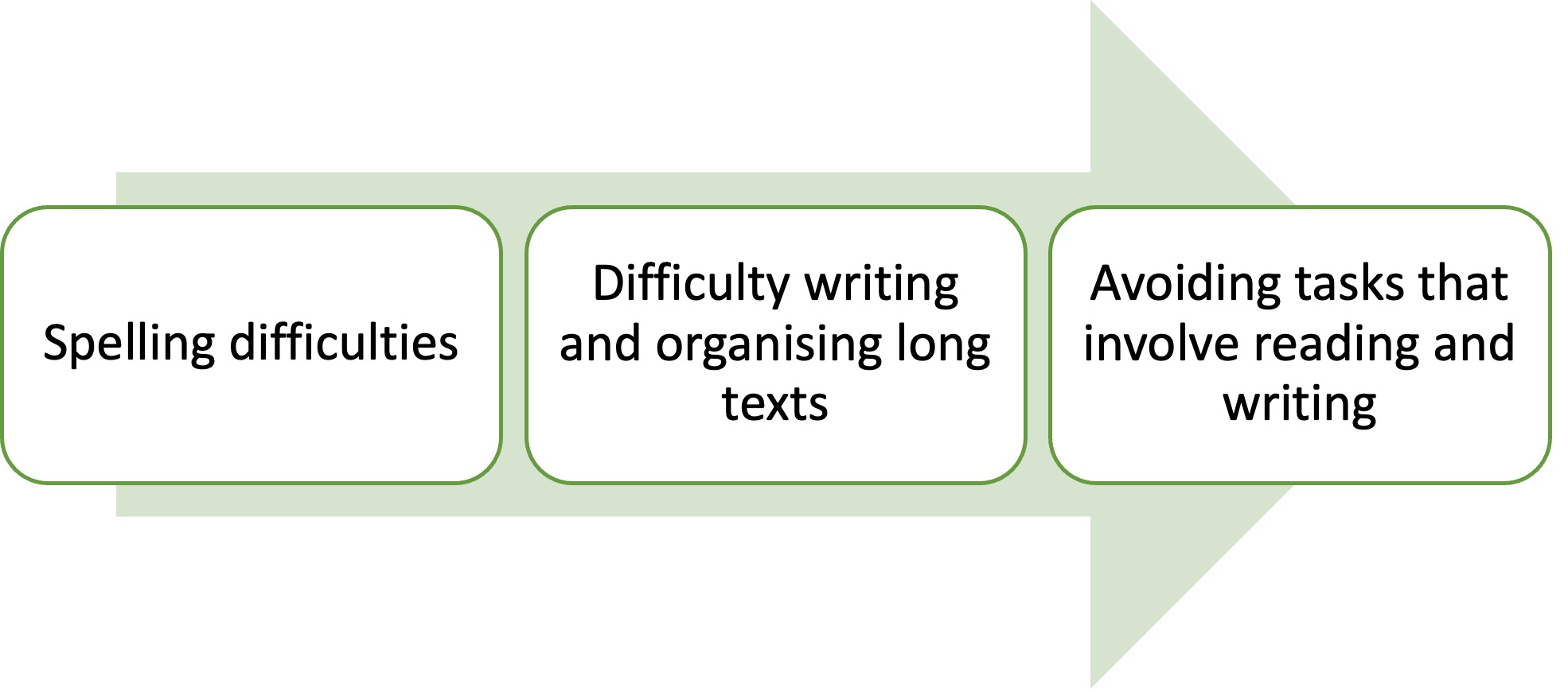
Adolescence and adult life:
As mentioned above, dyslexia does not disappear; it is something that accompanies a person throughout their life. However, people develop strategies that help them compensate for their difficulties. Some of the difficulties that may persist are:
The importance of the environment
Studies show that early detection and intervention lead to better results, as strategies are taught and needs are supported before people’s self-esteem is affected or they develop a dislike of school or reading.
Parents play a fundamental role, as they are the people who best understand the challenges their children face. They also play an essential role in providing support and emotional stability for their children.
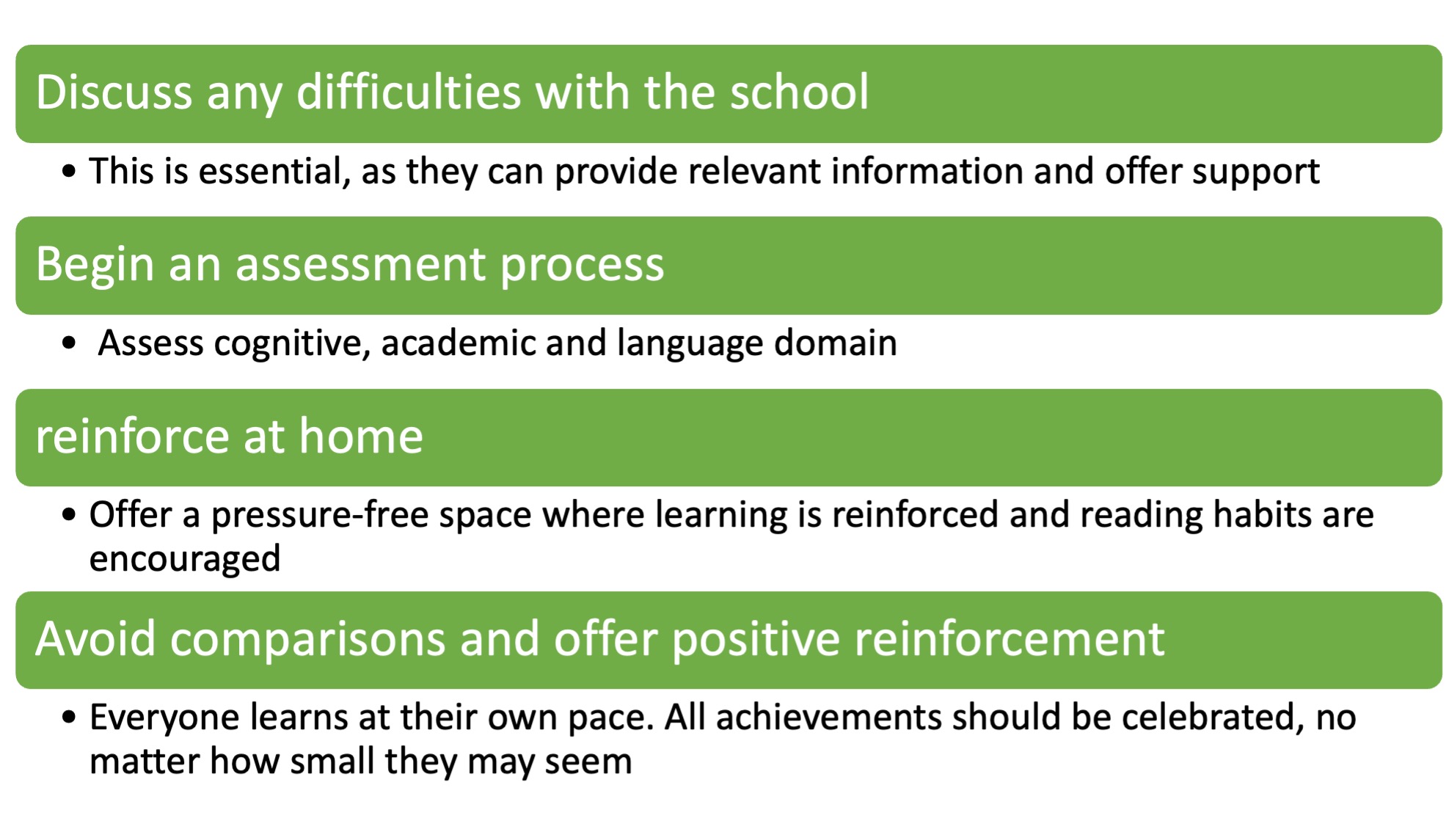
What should you do if you notice any of these signs?
How can I help my son or daughter?
One of the most frequent questions and concerns parents have is how to support their children at home. Parental support is essential for promoting language and reading development. This support will focus on stimulating phonological skills, reading and self-esteem.

It is essential to identify the signs of dyslexia early on. This will allow for early assessment and intervention, which will help the child develop strategies that will assist them in their role as a student. Furthermore, it has been proven that the earlier support and treatment begin, the more effective they will be.
Dyslexia is classified as neurodivergence and is characterised by a different way of processing information. Children with dyslexia can reach their full potential with the right treatment, intervention and adaptations tailored to their needs.
Parents play a fundamental role in observing and taking action, as they are the people who best understand the challenges their children face. They also have a privileged role in supporting intervention at home through games, as well as offering emotional support and encouraging a love of reading.
Bibliography
British Dyslexia Association. (2023). Signs of dyslexia in early childhood. https://www.bdadyslexia.org.uk
Catts, H. W., Terry, N. P., Lonigan, C. J., Compton, D. L., Wagner, R. K., Steacy, L. M., Farquharson, K., & Petscher, Y. (2024). Revisiting the definition of dyslexia. Annals of Dyslexia. https://doi.org/10.1007/s11881-023-00295-3
Catts, H. W., & Petscher, Y. (2022). A cumulative risk and resilience model of dyslexia. Journal of Learning Disabilities, 55(3), 171–184.
Donolato, E., Cardillo, R., Mammarella, I. C., & Melby-Lervåg, M. (2022). Language and learning disorders and internalizing problems. Journal of Child Psychology and Psychiatry, 63(5), 507–518.
Odegard, T. N., Farris, E. A., & Middleton, A. E. (2024). Dyslexia in the 21st century: Revisiting the consensus definition. Annals of Dyslexia, 74(3), 273–281. https://doi.org/10.1007/s11881-024-00316-9
Snowling, M. J., & Hulme, C. (2024). Do we really need a new definition of dyslexia? Annals of Dyslexia. https://doi.org/10.1007/s11881-024-00305-y
Division of Speech Therapy
Speech Therapist
Children, adolescents and adults
Languages: English and Spanish