










Summary
Growing up bilingual does not, by itself, cause language delays or disorders. Mixing languages and being more proficient in one are common. Reading, play and conversation help support language development. If a child shows significant difficulties in both languages or does not meet expected language milestones, a speech and language assessment is advisable.
Raising a child in a bilingual environment can feel challenging. Families often have many questions: “Is it better for my child to learn one language before another?”, “Will speaking two languages at home confuse them?”, “Could bilingualism cause language difficulties?”. These concerns are completely normal, especially when parents want to make the best decisions to support their child’s language development.
Current research shows that growing up in a bilingual environment not only does not harm language development, but can also provide numerous linguistic, social, cultural, and cognitive benefits. Therefore, consistent and rich exposure to multiple languages can be highly beneficial for children (Fibla et al., 2022).
Every family is unique. Some families use one language at home and another outside, while others combine several languages in daily life. Because of these individual differences, there is no single “correct” way to raise a bilingual child. In fact, some experts argue that there are as many ways to raise bilingual children as there are bilingual families (Fibla et al., 2022).
It is also important to remember that, as mentioned in a previous article, there are many different ways of “being bilingual.” Children do not need to speak both languages perfectly to benefit from bilingualism. Languages may develop at different rates or to different levels of proficiency (Fibla et al., 2022).
This article provides a practical guide for parents of bilingual children, explaining which strategies can support bilingual development at home and when it may be necessary to consult a speech and language therapist.
Is It Good to Raise a Child in a Bilingual Environment?
Current scientific evidence shows that language difficulties are not caused by exposure to two languages (Fibla et al., 2022).
Over the years, many myths about bilingualism and language development have circulated. One common misconception is that hearing multiple languages confuses children or may even cause speech and language delays. However, scientific evidence disproves these beliefs. Babies are able to distinguish between different languages from the first months of life (Bosch & Sebastián-Gallés, 2001).
Another widespread belief is that bilingualism causes language disorders. Research clearly shows that language disorders occur at the same rate in bilingual and monolingual children (Paradis et al., 2011).
On the other hand, bilingualism offers many benefits:
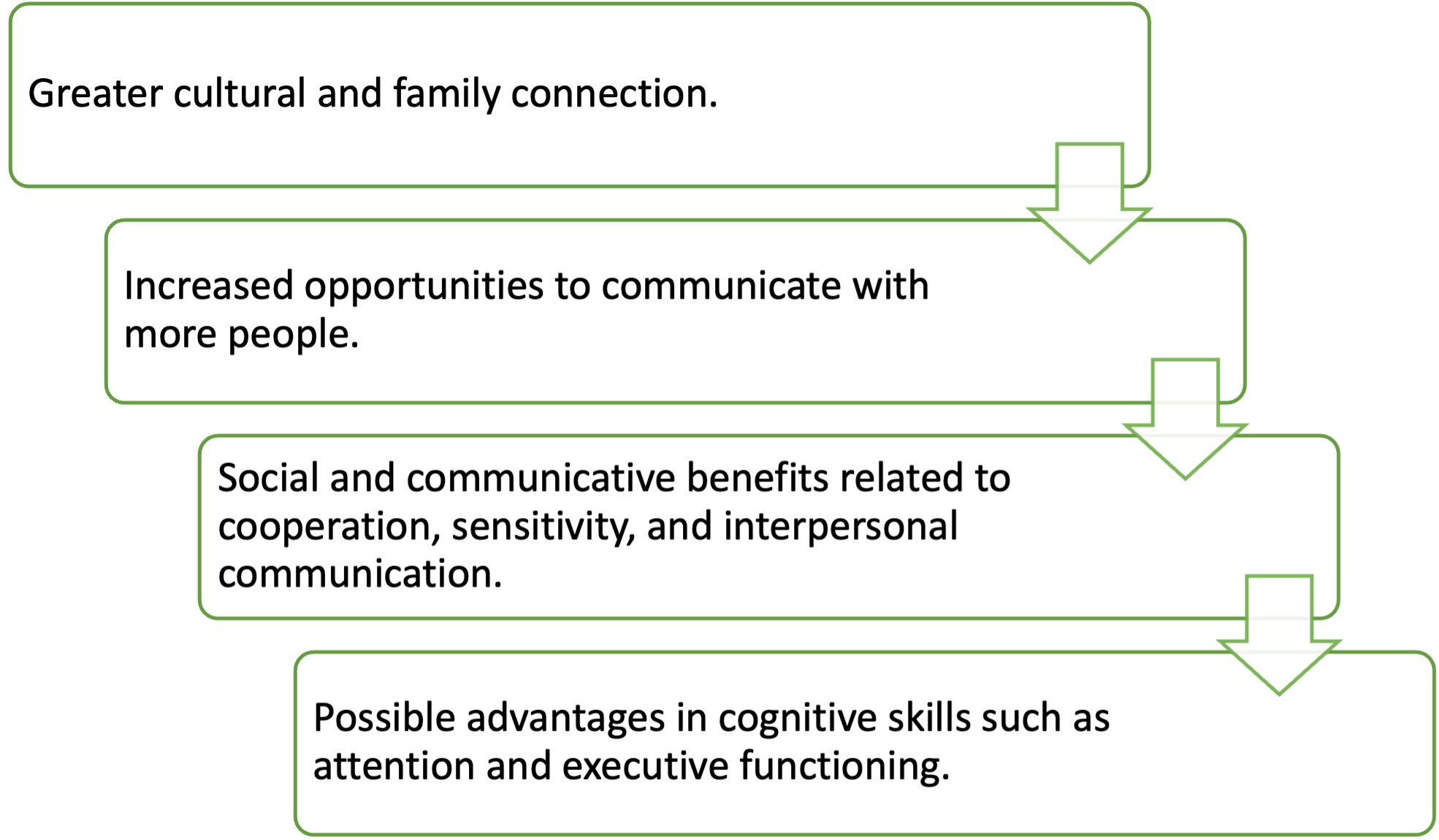
In addition, when parents speak different languages, bilingualism can strengthen the child’s connection with grandparents and other relatives, as well as support their cultural identity (De Houwer, 2021).
When Should Bilingualism Be Introduced?
The answer depends largely on the languages spoken by the parents and the child’s environment. In families where each parent speaks a different language, introducing both languages from birth is usually the most natural approach. Children are especially sensitive to the sounds and intonations of language during the first years of life (Werker & Tees, 2005).
Exposure to different languages from infancy allows the brain to become familiar with a wide range of sounds and develop the ability to differentiate them, while simultaneously learning the grammatical structures and vocabulary of each language.
Early bilingualism can lead to:
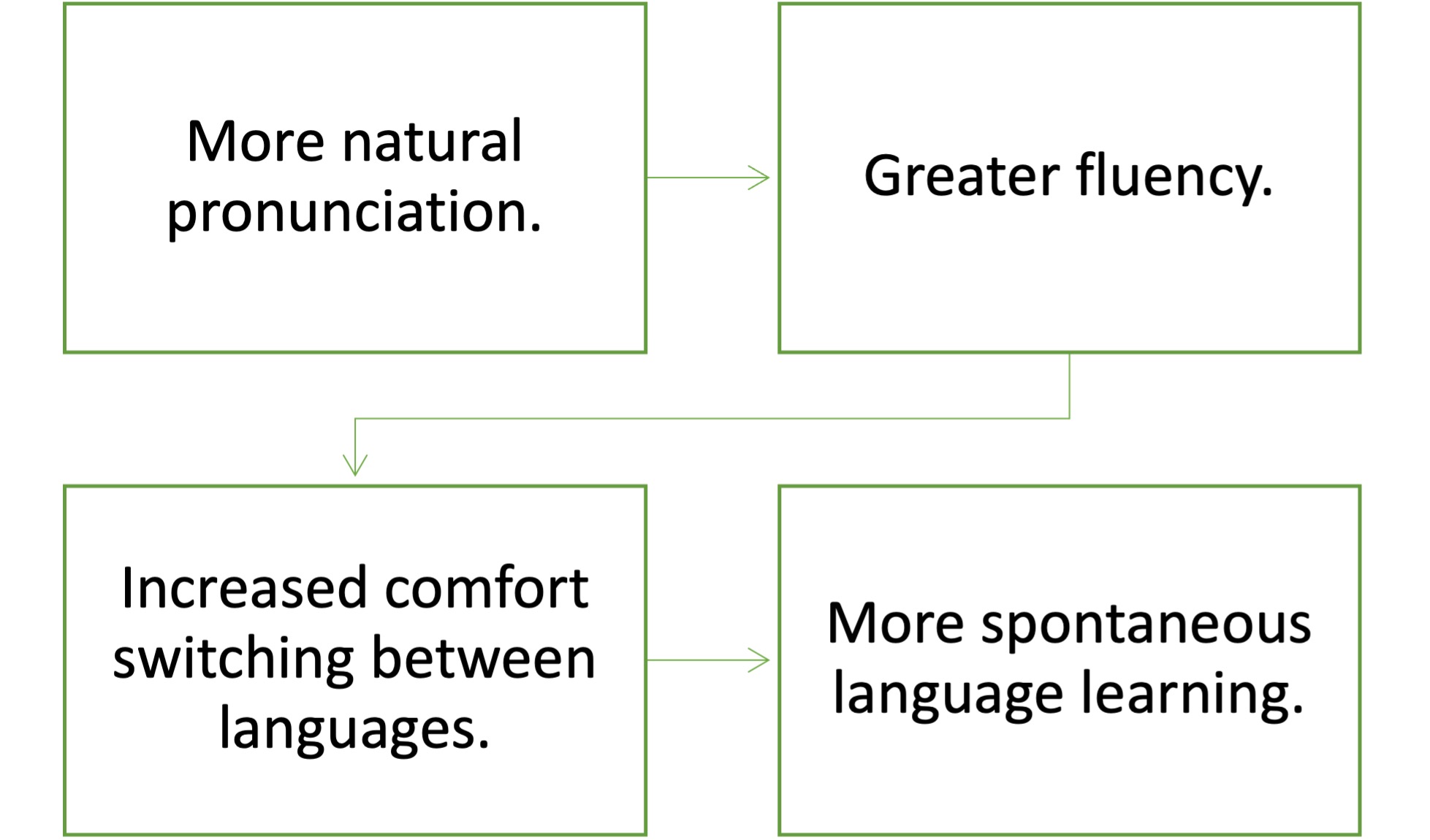
However, starting later is also possible. Many children begin learning a second language when they start school or move to another country. This later exposure can still provide cognitive and social benefits (Chamorro & Janke, 2022).
How to Raise Children in Bilingual Environments
- One Person, One Language (OPOL): The One Person, One Language strategy involves each adult consistently using one language with the child. This approach provides consistency and can help children differentiate between languages more easily (De Houwer, 2007).
- One Language at Home and Another Outside: Some families use one language—often the minority language—at home and another language in the wider community. This strategy is particularly useful when one language is not commonly heard outside the household.
- Creating Language Routines: Associating a language with specific routines helps children use the language in meaningful contexts. For example: Reading bedtime stories in one language, watching television in a specific language, playing board games in one language.
- Natural Exposure: Language learning is more effective when the language is used actively and meaningfully. Children benefit more from real interaction than from passive exposure.
My Child Mixes Languages: What Should I Do?
Mixing languages is completely normal. This phenomenon is known as code-switching and is a natural part of learning multiple languages.
Using words from different languages in the same sentence does not mean the child is confused. Often, it simply means that one word was more accessible to them at that moment. Some researchers suggest that code-switching reflects communicative flexibility (Chamorro & Janke, 2022).
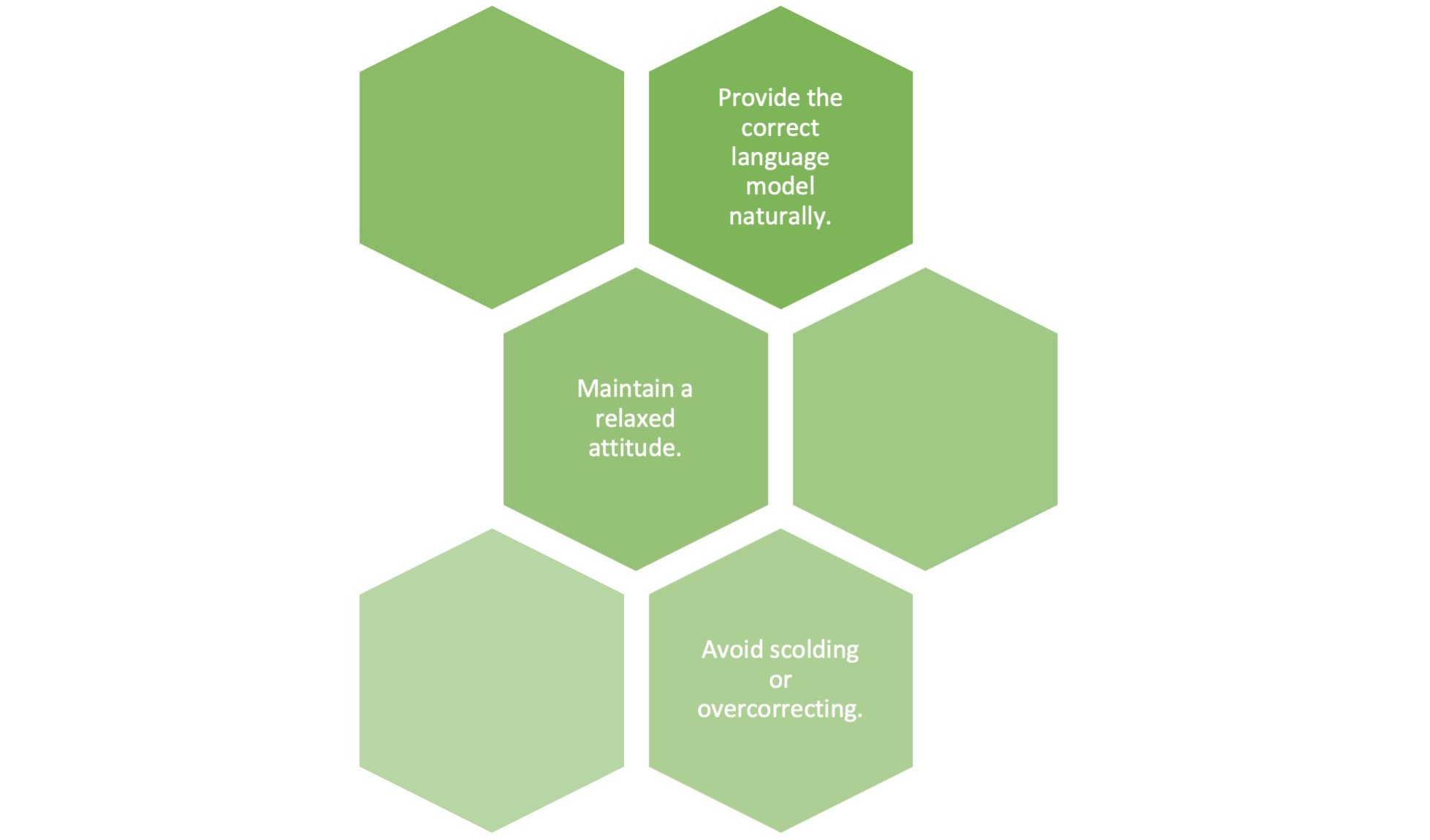
As adults, it is important to:
How Can We Encourage the Use of Both Languages at Home?
There are many ways to encourage bilingual language use at home:
Reading Stories: Reading stories is a highly effective way to expand vocabulary and develop language structures.
Games: Games promote meaningful learning in a spontaneous and playful way.
Music: Songs help children memorize vocabulary and sounds while also creating a positive emotional connection with the language.
Conversation: Talking with different people—family members, friends, extracurricular groups—allows children to hear different voices and accents.
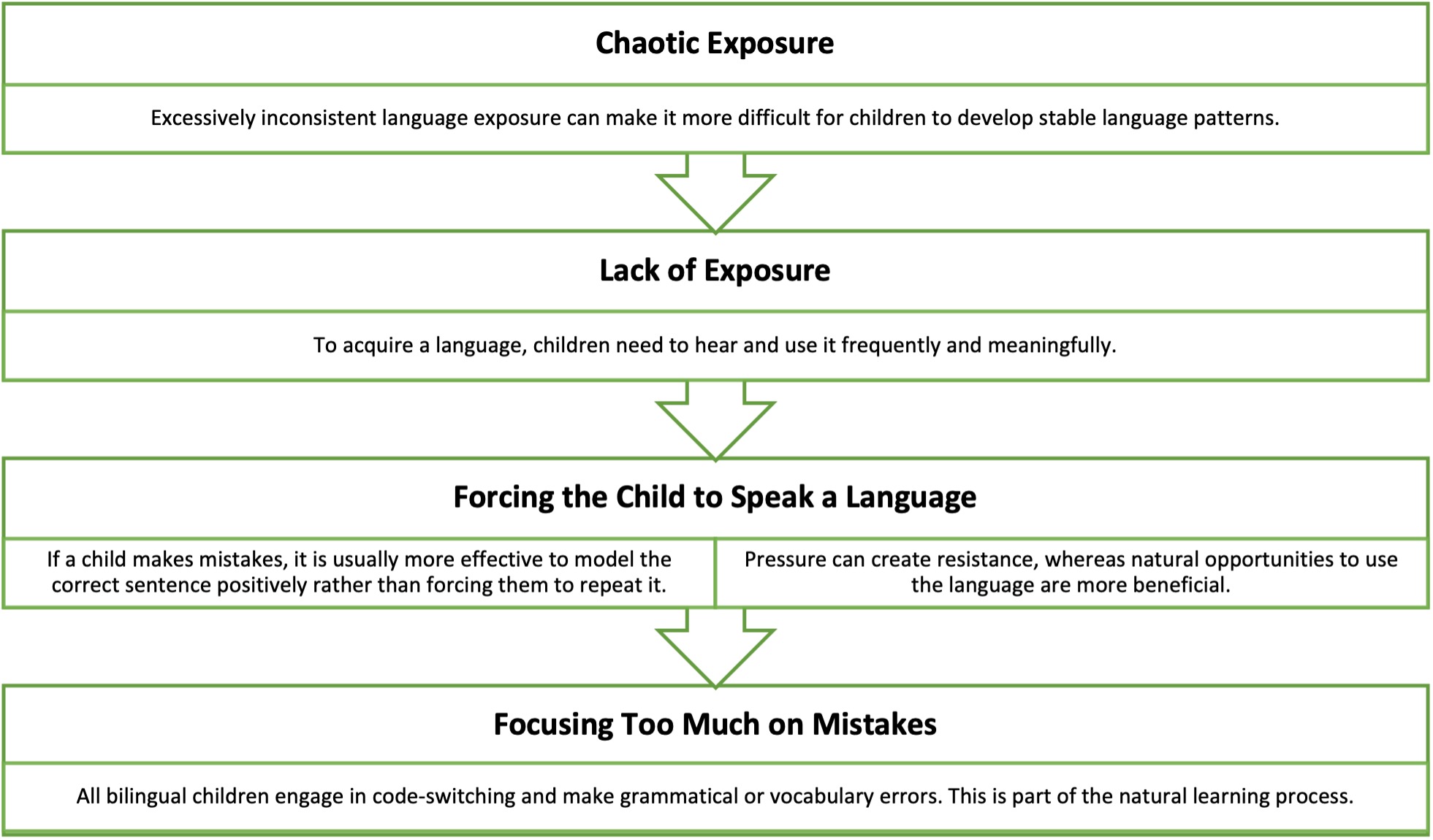
Common Mistakes When Raising Bilingual Children
When Should I Be Concerned?
It is important to distinguish between normal bilingual development and signs that may indicate a language delay or disorder. Warning signs may include:
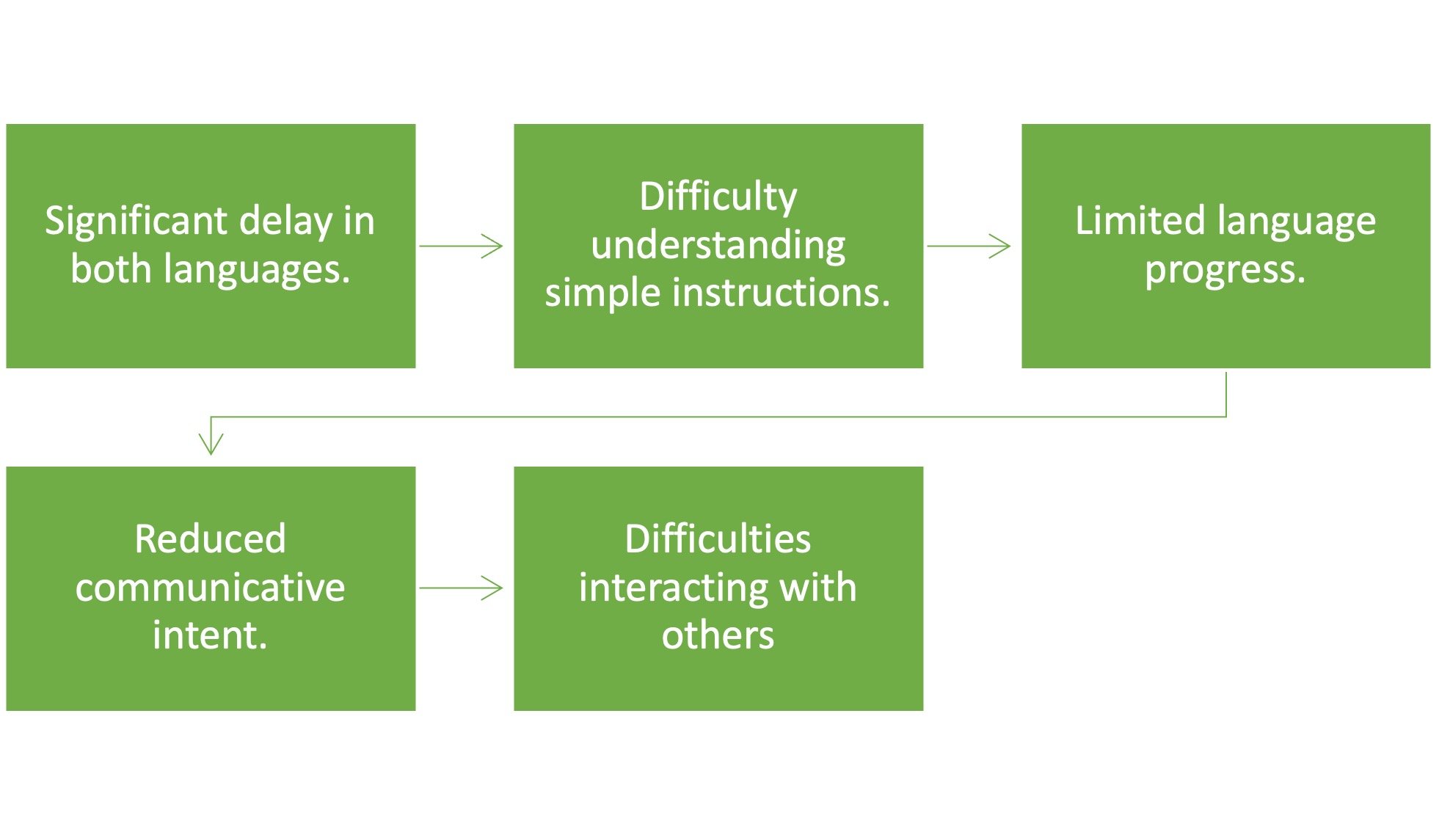
It is important to remember that a child may have stronger skills in one language than another. This depends on many factors, including exposure and the contexts in which each language is used. However, if developmental milestones are not being met or significant difficulties are observed in both languages, consultation with a specialist is recommended (Hoff et al., 2012).
Supporting Bilingual Development
A proper language evaluation should consider:
- The languages spoken by the child.
- The level of exposure to each language.
- The child’s family and school environment.
- Typical patterns of bilingual development.
Current research shows that assessing only one language can lead to misdiagnosis (Peña et al., 2018).
In addition, intervention should not focus solely on the child. Families play a fundamental role in language development and in creating positive experiences with languages. Parents can support language learning across many different contexts and help ensure meaningful communication opportunities.
Raising bilingual children is not always easy. It involves creating meaningful opportunities within the child’s natural environment to support communication and connection with both languages. Bilingualism opens a world of opportunities and can provide a rich developmental experience for both the child and the family.
Research clearly demonstrates that bilingualism does not confuse children or harm language development, provided that exposure to the languages is sufficient and of good quality (Fibla et al., 2022).
Every bilingual family is unique, and each develops different strategies to combine languages according to their needs. As discussed throughout this article, there is no single correct way to raise bilingual children. What matters most is respecting each child’s developmental pace and providing consistent exposure to both languages.
It is also essential to understand that mixing languages, having different levels of dominance, or going through different developmental stages is a normal part of bilingual development.
Bilingualism is much more than learning two languages—it is a tool for communication, cultural identity, and family connection that can accompany children throughout their lives.
Frequently Asked Questions (FAQ)
1. Can growing up bilingual cause a language delay?
No. Exposure to two languages does not, by itself, cause a language delay or disorder. A child’s language development should be considered across both languages.
2. When should a child start learning a second language?
Exposure can begin at birth when both languages are part of family life. Starting later can also offer social and cognitive benefits.
3. Is it normal for bilingual children to mix languages?
Yes. Mixing words from different languages, known as code-switching, is a common part of bilingual development and does not necessarily indicate confusion.
4. How can families support both languages at home?
Read stories, play, sing songs and encourage conversations with relatives, friends and other speakers of each language.
5. When should parents seek help from a speech and language therapist?
If a child misses expected language milestones or has noticeable difficulties in both languages. Assessment should consider both languages, exposure and family and school context.
Bibliography:
Bosch, L., & Sebastián-Gallés, N. (2001). Early language differentiation in bilingual infants. Infancy, 2(1), 29–49. https://doi.org/10.1207/S15327078IN0201_3
Chamorro, G., & Janke, V. (2022). Investigating the bilingual advantage: The impact of L2 exposure on the social and cognitive skills of monolingually-raised children in bilingual education. International Journal of Bilingualism, 26(1), 3–29. https://doi.org/10.1177/13670069211000837
De Houwer, A. (2007). Parental language input patterns and children’s bilingual use. Applied Psycholinguistics, 28(3), 411–424. https://doi.org/10.1017/S0142716407070221
De Houwer, A. (2021). Harmonious bilingualism: Well-being for families in bilingual settings. Cambridge University Press.
Fibla, L., Kosie, J. E., Kircher, R., Lew-Williams, C., & Byers-Heinlein, K. (2022). Bilingual language development in infancy: What can we do to support bilingual families? Policy Insights from the Behavioral and Brain Sciences, 9(1), 35–43. https://doi.org/10.1177/23727322211069312
Golinkoff, R. M., Can, D. D., Soderstrom, M., & Hirsh-Pasek, K. (2015). (Baby)Talk to me: The social context of infant-directed speech and its effects on early language acquisition. Current Directions in Psychological Science, 24(5), 339–344. https://doi.org/10.1177/0963721415595345
Hoff, E., Core, C., Place, S., Rumiche, R., Señor, M., & Parra, M. (2012). Dual language exposure and early bilingual development. Journal of Child Language, 39(1), 1–27. https://doi.org/10.1017/S0305000910000759
Paradis, J., Genesee, F., & Crago, M. (2011). Dual language development and disorders: A handbook on bilingualism and second language learning (2nd ed.). Paul H. Brookes Publishing.
Peña, E. D., Bedore, L. M., & Kester, E. S. (2018). Assessment of language impairment in bilingual children using semantic tasks: Two languages classify better than one. International Journal of Language & Communication Disorders, 53(1), 192–202. https://doi.org/10.1111/1460-6984.12320
Werker, J. F., & Tees, R. C. (2005). Speech perception as a window for understanding plasticity and commitment in language systems of the brain. Developmental Psychobiology, 46(3), 233–251. https://doi.org/10.1002/dev.20060

Division of Speech Therapy
Speech Therapist
Children, adolescents and adults
Languages: English and Spanish